Hospitality
Guest rooms, lounges and dining areas depend on layered scenes. Warm 2700–3000 K options, controlled accent beams and intuitive dimming help a space shift from arrival to evening service without flattening material texture.
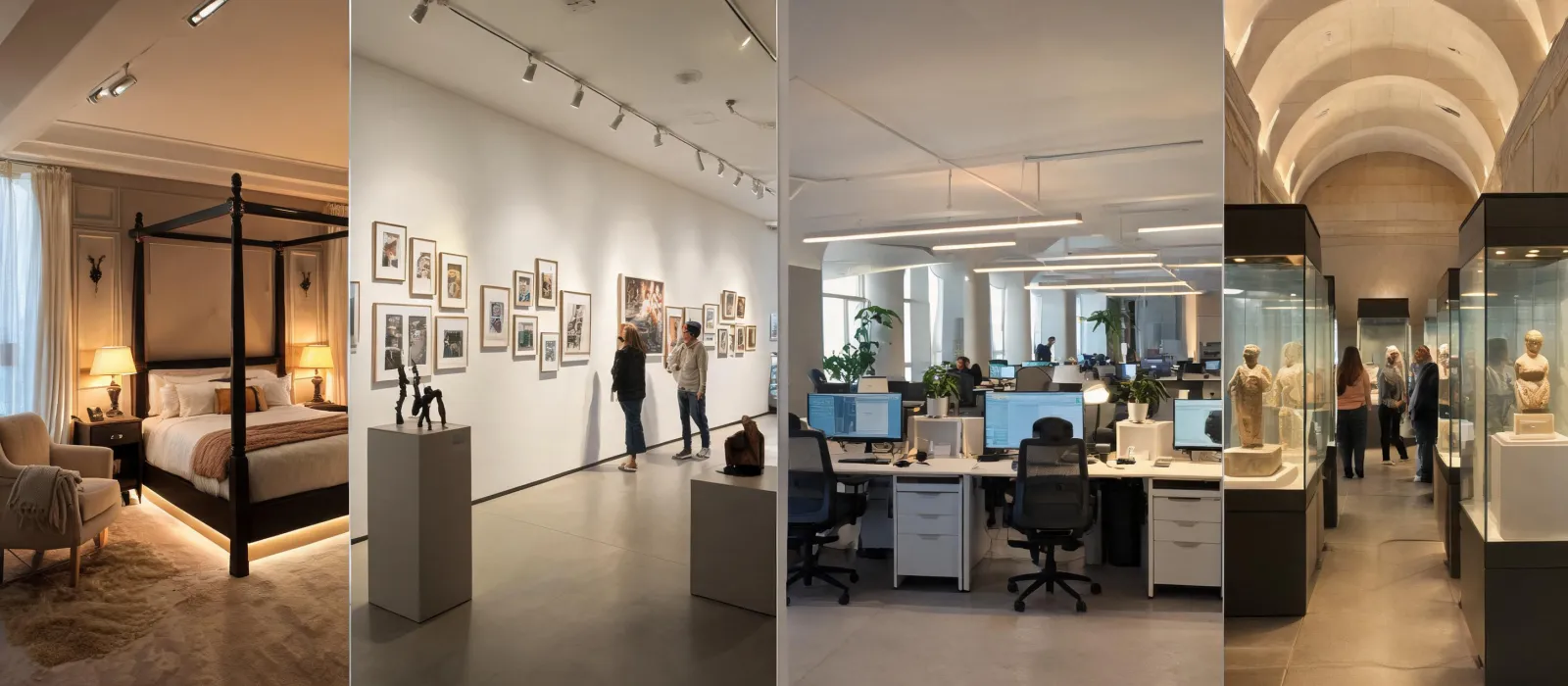
Guest rooms, lounges and dining areas depend on layered scenes. Warm 2700–3000 K options, controlled accent beams and intuitive dimming help a space shift from arrival to evening service without flattening material texture.
Merchandise needs hierarchy and credible color. High CRI and considered TM-30 information can support evaluation, while adjustable optics help layouts respond to changing displays and circulation routes.
Task visibility and screen comfort require more than a lumen target. Distribution, shielding, UGR context, surface brightness and daylight harvesting should be considered together with the room geometry.
Exhibits call for precise emphasis, careful spill and curatorial sensitivity. Beam control, dimming range, color quality and heat management matter alongside discreet architectural integration.
Domestic interiors combine orientation, reading, art, dining and rest. A small number of well-coordinated layers can create flexibility without turning everyday use into a controls exercise.
Hospitality brief
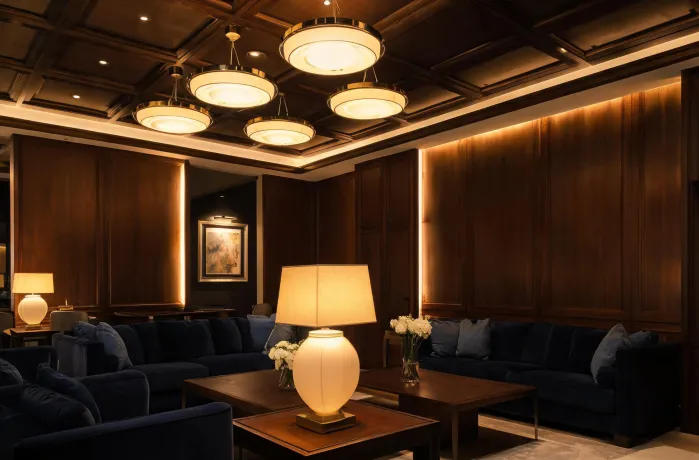
A lounge may need low ambient levels yet still require faces, menus and circulation edges to read comfortably. The selection process compares narrow and medium distributions, vertical illumination and local task light. Scene settings can then vary intensity without changing the visual hierarchy that gives the room its identity.
Retail brief
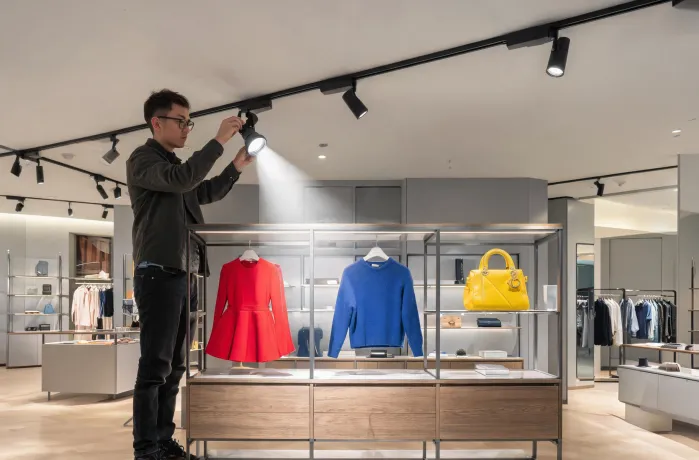
Adjustable track lighting supports seasonal layouts, but flexibility still needs discipline. Mounting position, beam angle, candela peak and aiming limits are reviewed against display size and sightlines. This reduces glare at common viewpoints and avoids treating higher output as the only route to emphasis.
Every environment also brings practical questions: cleaning access, replacement strategy, driver location, emergency circuits, local code and commissioning responsibility. We identify these dependencies early and distinguish product documentation from project-specific calculation. That allows the lighting designer, engineer and contractor to decide with a shared picture of performance and risk.
Share the activity, materials, mounting conditions and mood. We will help organize the next selection conversation.